Beyond “Us and Them”:
Art Making with Invasive Plants
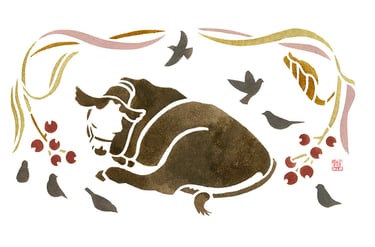
My Approach
The USDA defines "a non-native invasive plant is a species that is not native to the ecosystem under consideration, and its introduction causes (or is likely to cause) economic or environmental harm. Non-native invasive plants, exotic plants, and weeds are terms often used interchangeably, but there are differences between them." (link) Based on this definition, I understand that "invasiveness" is a local condition or behavior, not an inherent trait. I participate in invasive plant removals led by scientists, and I deeply respect the research behind this work.
Where I think there is room for care is not in the scientific categorization itself (that is not for me to discuss since I am not a scientist) but the societal perception of invasive plants as an "enemy”, the war-mindset that flattens all the complexity that led to their presence into a simple binary question: good or bad.
On nature walks, people often point at plants and ask: “Are they good or bad?” Many of those plants judged to be “bad" are called “Japanese.” I find it ironic, because from the 1630s-1850s, Japan had restricted foreign contact to block “bad” Western influences; some of these plants first traveled from Japan to Europe during that time. My native country and the U.S. were once enemies. That we are now allies, after a long, difficult way, and that I now call this country home, tells me enmity is not a permanent condition.
The enemy framing offloads blame onto the plant. It separates the problem from ourselves. We've played a role in creating the conditions in which they thrive: habitat fragmentation, soil disturbance, global trade, climate stress. As Columbia ecologist Matt Palmer explains, native plants "poorly suited to the new environment begin to decline," and only then does opportunity open for adapted newcomers. Blaming the plant that walks through an open door lets us avoid asking who opened it.
This isn't just a matter of framing, it shapes outcomes. Kudzu was once promoted as 'the savior of the South,' then declared the enemy — a myth so persistent that even now, the vine covers a fraction of the acreage long claimed, while lower-profile invasives do far more damage. Fear-driven judgment misdirects attention and resources away from where they're actually needed.
Framing something as our "enemy" incites fear and hatred in others and in ourselves. And without imagining a different relationship, we stay locked in the only dynamic we've allowed ourselves: us vs them.
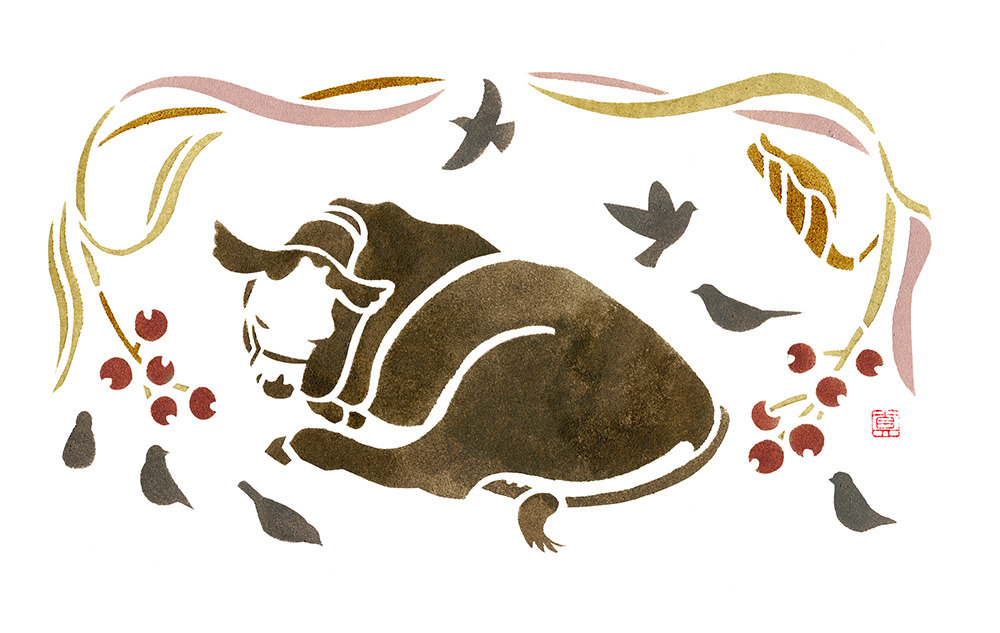
My approach reframes invasive plants as a medium to help us explore the question: Could we coexist?
One of artists' important jobs is to always challenge ourselves with different perspectives. Can we find meaning in the unwanted, the god in the demon, magic in the mundane, or patience in the dire? Can we turn fear into curiosity? Can we see things beyond "us vs them"? Because there is always more than one side to anything you see.
Transforming species into art asks how creative engagement might shift relationships from fear and hate toward curiosity and care, without denying ecological harm. This is an addition, not replacement of a perspective. We can look at things from multiple perspectives, from which new possibilities emerge. That's what I advocate for through this art practice.
Practice
Fabric
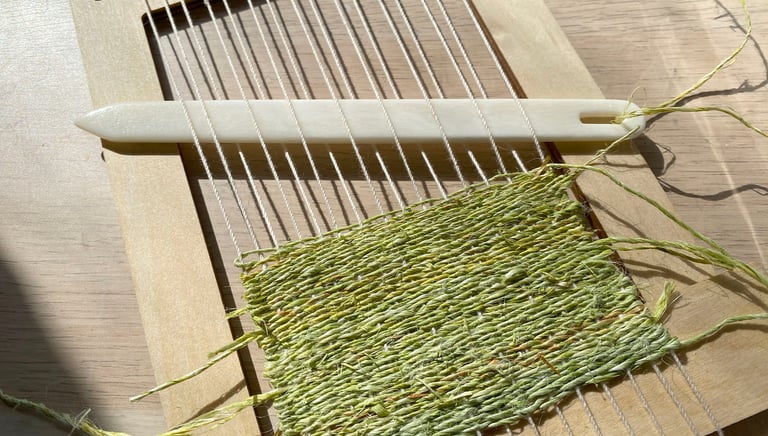
Making fabric using fiber from Oriental Bittersweet, learning from the long tradition of plant fiber fabric making in Japan.
Lake Pigment


Making natural pigments from invasive plants such as: Multiflora Rose, Toringo Crab Apple, Common Buckthorn, Japanese Barberry, Honeysuckle, collected with guidance from professionals.
If you are interested in learning more about these experiments and thoughts on these materials, please visit my blog here.

This process-based inquiry will culminate in:
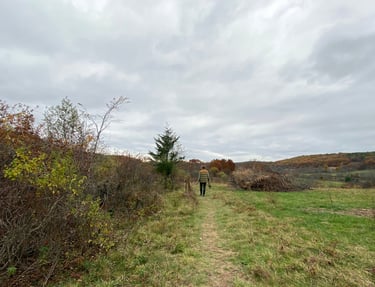
An outdoor installation of stencil murals along the Hawthorne Valley Farm Biodiversity Trail in Ghent, NY, created using only materials gathered through careful, on-site collection.
An illustrated art zine titled Beakuency: Bird-Friendly Farms in Hudson Valley!, featuring imagery made with invasive plants, and hands-on paint-making-from-invasive-species workshops that highlight local agricultural conservation and explore coexistence and diversity. This project is informed by the expertise of Cornell Cooperative Extension of Columbia and Greene Counties.